How Much Whisky Can Your Malt Produce?
A Practical Method to Estimate Distillery Output Before Production Begins
Suppose you are planning a whisky distillery that will process 100 tonnes of malt every week. Before choosing a mash tun, a pair of pot stills or even a warehouse, one question has to be answered: how much whisky will those 100 tonnes actually produce?
One of the first questions asked during a whisky distillery project is surprisingly simple:
How much whisky can be produced from one tonne of malt?
Investors ask this when evaluating project feasibility. Distillers ask it when planning production schedules. As an equipment supplier, we hear it during almost every initial consultation.
The answer, however, is not as straightforward as many people expect.
Whisky production is not determined by still size alone. A larger still does not automatically produce more whisky, just as a larger fermenter does not guarantee higher alcohol recovery. One mistake made by first-time investors is to estimate production from still size alone. A 5,000-litre still does not determine annual whisky output. The amount of alcohol available before distillation does.
The easier starting point is understanding how much alcohol can be extracted from the grain and how efficiently that alcohol can be recovered throughout the production process.
For that reason, professional distilleries calculate Litres of Absolute Alcohol (LAA). Once the alcohol content is known, whisky volume becomes easy to estimate.
Why Distilleries Measure Alcohol Instead of Whisky
New distillers often focus on final bottle volume. Experienced distillers focus on alcohol.
The reason is simple. Whisky changes strength several times during production:
- Wash may contain 7–10% ABV.
- New make spirit often leaves the still above 70% ABV.
- Cask filling typically occurs around 63.5% ABV.
- Bottled whisky may be reduced to 40–46% ABV.
The liquid volume changes, but the amount of pure alcohol remains constant.
This is why commercial distilleries use LAA as the standard measurement of production performance.
For example, 1,000 litres of spirit at 63.5% ABV contains 635 litres of absolute alcohol.
Likewise:
- 635 LAA = 1,587 litres at 40% ABV
- 635 LAA = 1,380 litres at 46% ABV
- 635 LAA = 1,000 litres at 63.5% ABV
The alcohol remains the same. Only the dilution changes.
Starting with Malt
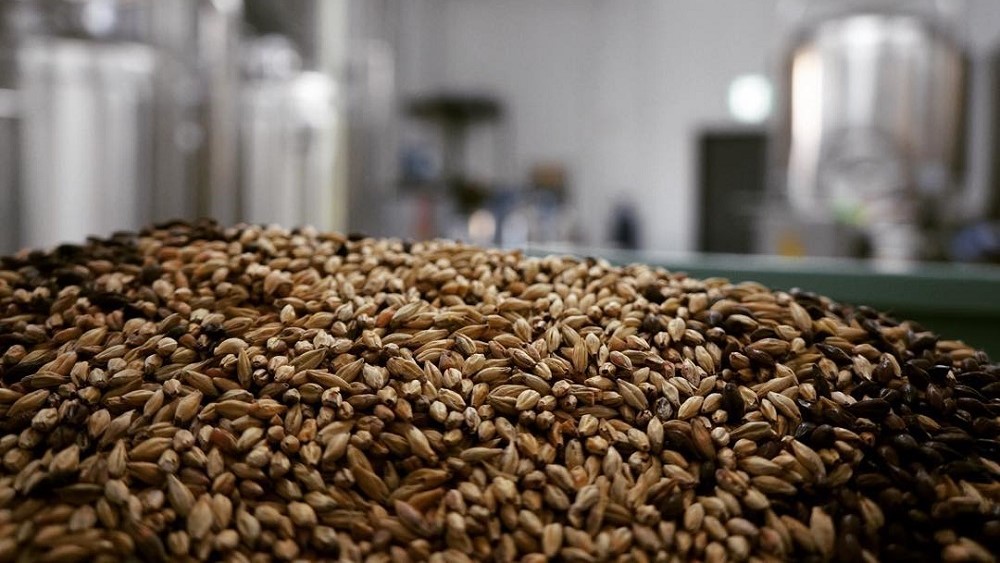
Suppose a distillery processes one tonne of well-modified malted barley. Laboratory analysis may indicate a potential spirit yield of approximately 420 LAA per tonne.
This does not mean the distillery will automatically recover 420 litres of alcohol. It represents the theoretical potential available in the grain.
The actual result depends on:
- Milling efficiency
- Mash conversion
- Wort extraction
- Fermentation performance
- Distillation recovery
- Spirit losses
Nevertheless, 420 LAA/t provides a useful starting point.
The Difference Between Theoretical Yield and Actual Yield
A common mistake among new investors is assuming theoretical yield equals actual production. It never does.
Even highly efficient Scotch whisky distilleries experience losses throughout the process. Consider a distillery processing 100 tonnes of malt.
Theoretical alcohol:
100 × 420
= 42,000 LAA
Actual recovery may be:
100 × 415
= 41,500 LAA
The difference appears small—only 500 litres of alcohol. Yet across an annual production schedule involving thousands of tonnes of malt, those small differences become commercially significant. This is why yield matters.
A Practical Distillery Yield Benchmark
Many commercial malt whisky distilleries regard approximately 410–425 LAA per tonne as strong operational performance.
Below this range, engineers and production managers often begin investigating potential causes.
Typical areas include:
- Incomplete mash extraction
- Poor grist consistency
- Low attenuation
- Fermentation temperature instability
- Spirit losses during distillation
- Condenser inefficiencies
Yield is therefore not simply a production statistic. It is a measure of overall process efficiency.
Converting Alcohol into New Make Spirit
Suppose a distillery achieves 415 LAA/t from one tonne of malt.
If spirit is filled into casks at 63.5% ABV:
415 ÷ 0.635
= 654 litres
Therefore:
One tonne of malt may produce approximately 654 litres of new-make spirit at cask-filling strength.
This figure provides a realistic planning estimate for warehouse capacity and cask requirements.
Converting Alcohol into Bottled Whisky
Many investors prefer to think in bottles.
Using the same 415 LAA:
At 40% ABV:
415 ÷ 0.40
= 1,037.5 litres
If bottled in 700 ml bottles:
1,037.5 ÷ 0.7
≈ 1,482 bottles
Therefore:
One tonne of malt can theoretically produce approximately 1,480 bottles of 40% ABV whisky before maturation losses.
The phrase “before maturation losses” is important. Whisky spends years in oak casks.
During maturation:
- Water evaporates
- Alcohol evaporates
- Some spirit remains in the wood
This natural loss, commonly called the Angel’s Share, reduces the final bottling volume.
Why Two Distilleries Can Produce Different Results
If two distilleries use identical malt, why might their yields differ?
Because alcohol recovery depends on the entire process. Distillation itself does not create alcohol. Fermentation creates alcohol. The still merely recovers it. A small reduction in mash efficiency can lower fermentable sugar extraction. A small reduction in attenuation leaves alcohol unrealized. Minor spirit losses can accumulate over hundreds of production runs. Consequently, identical grain inputs often produce different final outputs.
Where Yield Losses Commonly Occur
Production records typically identify losses in four areas:
- Milling
Poor grist distribution can reduce extract recovery.
- Mashing
Incomplete starch conversion leaves potential alcohol trapped in spent grains.
- Fermentation
Low attenuation reduces ethanol production.
Many Scotch distilleries compare expected alcohol production from wash attenuation with actual spirit recovered to verify fermentation performance and identify hidden losses.
- Distillation
Alcohol can remain in:
- Pot ale
- Spent grains
- Feints systems
Mechanical issues such as condenser leaks or vapour losses can also reduce recovery.
Equipment Matters More Than Many Investors Realize
The calculations above appear simple. Achieving them consistently is not.
A distillery may be designed to produce 415 LAA/t, yet only recover 395 LAA/t if equipment performance falls below expectations.
Consistent yield depends on:
- Proper grain milling
- Efficient mash tuns
- Stable fermentation control
- Correct still sizing
- Effective condenser design
- Reliable process
For this reason, modern distillery projects increasingly focus on process integration rather than individual equipment purchases.
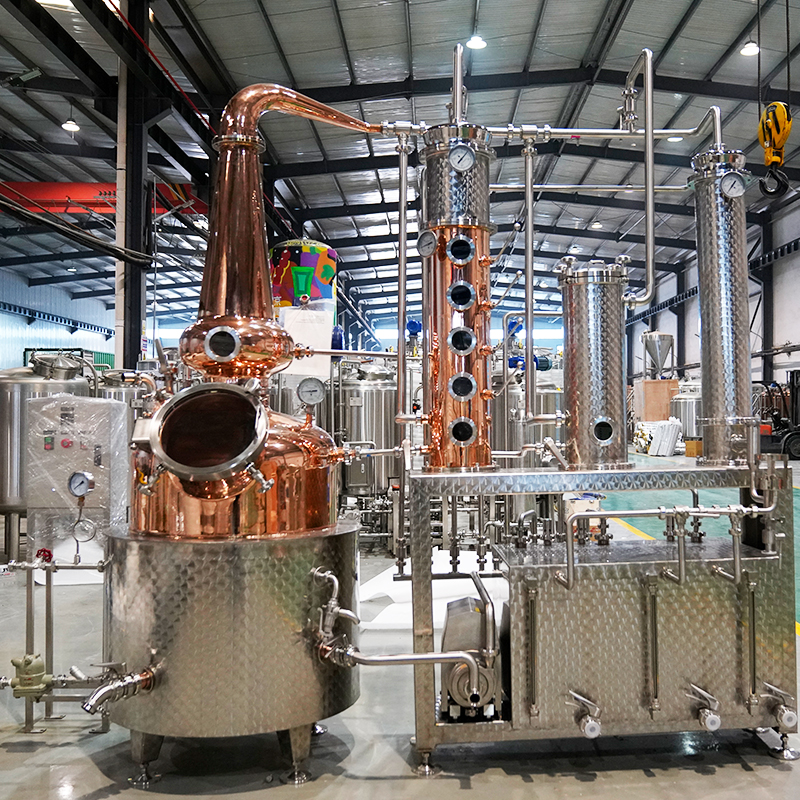
At Tiantai, distillery design begins with the expected alcohol balance. Mash tuns, fermenters, copper pot stills, condensers and automation systems are engineered as a coordinated production process, helping customers maximize alcohol recovery while maintaining spirit quality and operational efficiency.
Final Thoughts
Estimating whisky production begins long before the spirit reaches the cask.
The most reliable approach is to calculate alcohol first, then convert that alcohol into new make spirit and finished whisky.
For planning purposes, a well-operated malt whisky distillery achieving approximately 415 LAA per tonne can expect around 654 litres of new make spirit, or approximately 1,480 bottles of 40% ABV whisky, from every tonne of malt processed.